

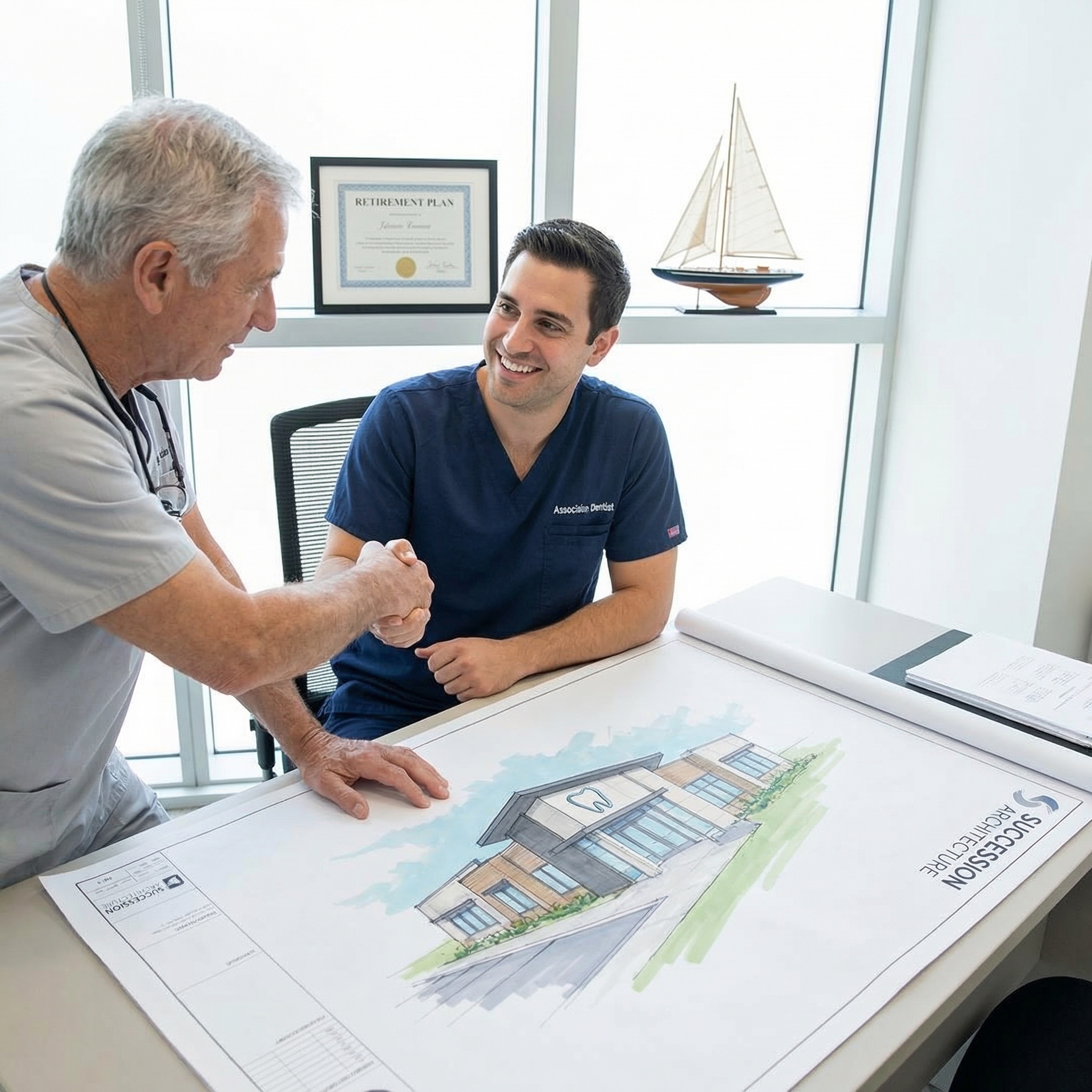
The Succession Architecture: Why Your Next Associate Hire is Actually Your Retirement Plan
Related Posts

Behind the Scenes: How Arthur Marshall Simplifies Temporary Dental Staffing

What to Expect When Applying for Our Endodontist Position

The Hidden Cost of an Empty Chair: What Your Vacancy is Actually Costing You
We’ve all seen the countdown clocks. Maybe yours is a mental one, or maybe it’s a sticky note tucked inside your desk drawer. Ten years. Five years. Thirty-six months. Whatever the number is, it represents the moment you finally hang up the handpiece, hand over the keys, and step into the next chapter of your life.
But here’s the reality that keeps most practice owners up at night: a practice is only a "business" if it can run without you. If the value of your clinical legacy is tied entirely to your own two hands, you don't own an asset, you own a very high-paying job.
At Arthur Marshall, we’ve spent years watching the shift from private practices to DSOs. We’ve seen owners walk away with a celebratory check, and we’ve seen others realize, too late, that their "retirement plan" was actually just a chair that nobody wanted to sit in.
The difference isn't just in the equipment or the zip code. It’s in the architecture of the team. Specifically, it’s about shifting your mindset from "filling a seat" to "finding a successor." Your next associate isn't just a clinical producer. They are the cornerstone of your exit strategy.
The Transactional Trap: Why "Filling a Chair" Is a Financial Liability
For too long, dental recruitment has been treated like a commodity service. You need a body, you call a recruiter, they send a resume, you check the clinical speed, and you sign the contract. It’s transactional. It’s fast. And for an owner looking at a 5-year horizon, it’s incredibly dangerous.
When you hire for the short term, you’re looking for clinical production to cover your overhead. But when you hire for succession, you’re looking for enterprise value.
Think about it this way: if a potential buyer, whether it’s a private equity group or a young doctor looking for an acquisition, sees a practice where the lead clinician is halfway out the door and the associate has no leadership skin in the game, they see risk. Risk equals a lower multiple. Risk equals a smaller retirement nest egg.
We aren't just filling roles; we're building the The Succession Architecture. We believe that the right hire should stabilize the practice today while securing its valuation for tomorrow.

The Math of Exit: How Talent Drives Your Multiple
Let’s talk numbers, but let's keep it grounded. In the world of DSOs and clinical consolidation, valuation is often driven by EBITDA (Earnings Before Interest, Taxes, Depreciation, and Amortization). But there is a "Hidden EBITDA" that many owners overlook: the stability of the clinical team.
A practice with 30% clinical turnover is a leaky bucket. Every time an associate leaves, you lose patient continuity, you spend thousands on re-training, and your brand equity takes a hit. Conversely, a practice with a "Successor Associate", someone vetted for leadership and long-term fit, creates a "Talent Moat."
If you are 3–10 years away from retirement, your goal is to make yourself the least important person in the building. That sounds counterintuitive to the ego, but it’s music to an investor's ears. By hiring a dentist recruiter who understands the long game, you’re investing in an asset that grows in value as you slowly step back.
This applies across the board. Whether you’re looking for a specialized surgeon, a long-term associate, or a future partner-track dentist, the principle remains: the quality of the staff dictates the final price tag of the business.
Vetting for the "Keys": Leadership vs. Hand Speed
If you want to find a successor, you have to stop interviewing for clinical skills alone. Yes, they need to be able to prep a crown or manage a complex extraction. That’s the baseline. But you can’t "retirement plan" your way out of a practice with someone who just wants a paycheck.
You need to vet for leadership qualities. You’re looking for:
- The "Owner" Mindset: Do they care about the P&L? Do they notice when the schedule is light and offer to call patients?
- Cultural Alignment: Do they treat the front office staff with respect? A successor who burns out your core team will destroy the practice before you even reach the closing table.
- Clinical Curiousness: Are they staying ahead of trends like pharmacogenomics or digital integration?
At Arthur Marshall, our approach to candidates isn't just a background check. We look at the "why" behind the clinician. We want to know if they have the stomach for leadership and the heart for patient care. That's how we ensure a smooth transition of the "keys."

The Multi-Site Dental Perspective: Stability as a Growth Strategy
This isn't just a concern for the solo practitioner. In multi-location dentistry, succession planning is the difference between stable same-store performance and a constant churn that quietly drags collections.
For DSOs and large-scale dental organizations, the "Succession Architecture" is about clinical continuity and leadership development. Scaling is easy; maintaining a cohesive clinical standard as you grow from 5 to 50 locations is the hard part.
We’ve seen it time and again: the organizations that thrive are the ones that treat dental recruitment as a strategic pillar, not an HR checkbox. They hire with the 10-year horizon in mind, ensuring that as the "old guard" moves toward retirement, there is a literal "bench" of talent ready to step up.
The Identity Shift: From Clinician to Architect
One of the hardest things for a practice owner to do is to stop being the "star" of the show. We’ve written before about the identity shift required to lead a multi-million dollar practice, and it’s never more relevant than during succession planning.
To find your retirement plan, you have to be willing to mentor. You have to be willing to let someone else take the "big cases" while you’re still there to watch. You are no longer just a dentist; you are an architect building a foundation that will stand long after you’ve left the building.
Here’s the thing: you can’t rush this. If you wait until 6 months before you want to retire to find a successor, you’re going to settle. And settling is the fastest way to leave money on the table.

The Path Forward: Let’s Build the Architecture Together
If you’re looking at that 3–10 year horizon and feeling the weight of the "keys" in your pocket, it’s time to stop thinking about hiring as a cost center. It’s an investment in your freedom.
We aren't just another recruitment firm. We’re partners in your exit strategy. We understand that every placement we make is a brick in the wall of your retirement plan. We don't just find clinicians; we find the future of your legacy.
Whether you're a solo owner in a rural town or a CEO of a growing DSO, the architecture of your team will determine the success of your succession.
If you're ready to shift your mindset and start building for the exit, we should talk. We’ve helped countless owners navigate this transition, and we’re ready to help you find the person who will eventually take those keys.
It’s your retirement. Let’s make sure it’s built on a solid foundation.
Want to see how we’ve helped other practices secure their future? Check out our success stories or dive deeper into our specialized resources for employers.