

The Great Hygienist Hunt: Navigating the West Coast Staffing Squeeze in 2026
Related Posts

Behind the Scenes: How Arthur Marshall Simplifies Temporary Dental Staffing
What to Expect When Applying for Our Endodontist Position

The Hidden Cost of an Empty Chair: What Your Vacancy is Actually Costing You
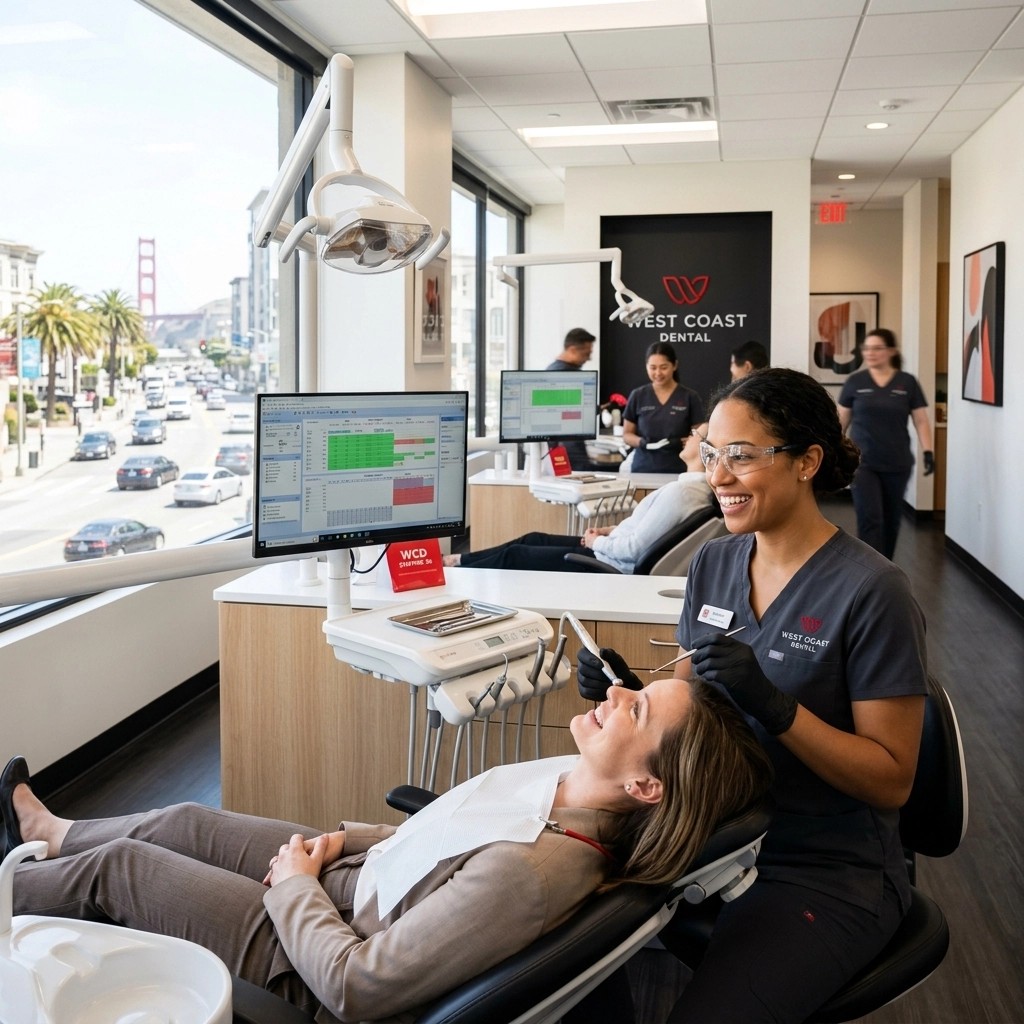
At its core, a dental practice is a delicate ecosystem of trust, a balance between the clinical excellence of the providers and the personal connection they maintain with their patients. But in 2026, particularly for those of us operating on the West Coast, that ecosystem is facing its most significant challenge yet. We aren’t just talking about a busy schedule or a high overhead. We’re talking about the "Great Hygienist Hunt."
If you’re a practice owner in California, Washington, or Oregon, you’ve felt the shift. It isn’t just that it's hard to find good people; it’s that the very nature of employment in the dental industry has fundamentally changed. The chairs are there. The patients are waiting. But the professionals who bridge the gap between diagnosis and prevention are increasingly hard to find, and even harder to keep.
We’re not just watching this trend from the sidelines, we’re building the strategies to navigate it. We understand that for a West Coast practice, the "fiscal squeeze" isn't a buzzword; it's a daily reality where rising wages meet stagnant insurance reimbursements.
The West Coast Reality: Why 2026 Feels Different
The Pacific Northwest and California have always been early adopters of change, but that "pioneer spirit" comes with a price. Today, the cost of living and the evolving expectations of the workforce have created a perfect storm. When we talk to practice owners in Seattle, Portland, or the Bay Area, the story is remarkably consistent.
The hygienist shortage isn't just a staffing issue; it's a productivity bottleneck. Every day a hygiene chair sits empty, the practice loses more than just a cleaning fee. It loses the opportunity for restorative diagnosis, patient education, and long-term loyalty. That’s over $1 million a year in unrealized potential for some mid-sized practices.

But why is the West Coast hit harder? It’s a combination of aggressive state regulations, a higher threshold for "work-life balance," and a competitive landscape where tech and other sectors are poaching top-tier administrative and clinical talent with promises of remote work and "unlimited" PTO. In this environment, a standard "Help Wanted" ad isn't just ineffective, it's invisible.
The Fiscal Squeeze: When the Math Stops Making Sense
Here is the hard truth: hygienist wages in the West are rising at a rate that would make most CPAs lose sleep. In many metro areas, we’re seeing hourly rates that have climbed 30% or more in just a few short years. Meanwhile, insurance reimbursements have remained stubbornly flat, often stuck in a 2019 mindset.
That’s the "fiscal squeeze." Your biggest line item is growing, while your revenue per procedure is being compressed by payers who don't care about the cost of living in San Francisco or the price of supplies in Bend.
Yes, we see the numbers. But we also see the solution. To survive this squeeze, practices are having to rethink their entire business model. This means moving beyond the traditional PPO-dependency and looking at membership models or integrating high-value clinical services, like GLP-1 weight management support or advanced periodontal therapies, that justify higher fees and provide more rewarding work for your staff.
The Front Lines of Public Health: FQHCs in the Crosshairs
The shortage is difficult for private practices, but for Federally Qualified Health Centers (FQHCs) across the West Coast, the situation is even more acute. These centers are the backbone of the community safety net, providing essential care to the most vulnerable populations. When an FQHC can’t fill a dental hygienist or clinical role, it isn't just a loss of revenue, it's a loss of access to care for hundreds of families.
We’ve spent a lot of time working with FQHC leadership to bridge this gap. The challenge here is unique: you often can’t compete on raw salary alone due to budget constraints. Instead, the focus must shift to the mission. We help these organizations leverage loan repayment programs, specialized grants, and the profound sense of purpose that comes with community health. It’s about finding the "right" person, not just any person.

If you are leading a community health center, you know that dental recruitment in this sector requires a different playbook. It’s about building a culture where the staff feels supported by the administration, not just managed by them. For more on how we approach these unique challenges, you can explore our services.
Flipping the Script on Recruitment and Retention
So, how do you win the hunt? It starts by acknowledging that the old ways are dead. If your strategy is to post an ad on a generic job board and wait for the resumes to roll in, you’re going to be waiting a long time.
In 2026, recruitment is a marketing exercise. You aren't just looking for an employee; you are selling a lifestyle and a career path.
1. The High-Trust Culture
Talent goes where it’s celebrated, not just tolerated. On the West Coast, hygienists are looking for "high-trust" environments. This means clinical autonomy, a voice in practice decisions, and a clear understanding of the "why" behind the work. We’ve found that practices that involve their hygienists in the selection of new technology or the design of patient protocols have significantly higher retention rates.
2. Radical Flexibility
The 8-to-5, Monday-to-Friday schedule is becoming a relic. We are seeing success with "modular scheduling", allowing staff to work four 10-hour shifts, or even three 12s. Some practices are even offering "job-sharing" opportunities where two part-time hygienists split a full-time role. It’s more work for the office manager, sure. But it’s better than an empty chair.
3. Creative Compensation
If you can’t raise the hourly rate any further, look at the fringes. Childcare stipends, commuting allowances for those coming from outside the city, or "wellness days" that don't count against PTO. We've even seen practices offer "sign-on stay-on" bonuses, where a bonus is paid out incrementally over 24 months to encourage long-term commitment.

Why "Post and Pray" is a Strategy of the Past
Here’s the thing: you’re a dentist, or a CEO, or an HR Director. You weren't trained to be a headhunter. And in a market this tight, you shouldn't have to be.
That’s where a specialized dental staffing agency comes in. At Arthur Marshall, we don’t just "find people." We curate matches. We spend time on the ground (yes, we still do on-site visits) to understand the DNA of your practice. We want to know what the breakroom feels like on a Tuesday afternoon. We want to know the personality of the Lead Dentist.
Why? Because a mismatch is more expensive than an empty seat.
We use a mix of deep industry relationships and sophisticated AI-driven sourcing to find the "passive" candidates: the ones who aren't looking at job boards because they’re already working, but who might be open to the right opportunity if it’s presented by someone they trust. That's the difference between a resume and a recruitment partner. You can see how this approach has worked for others in our success stories.
Building the Road Ahead
We’re not sounding alarms for drama. The staffing squeeze is real, and it’s uncomfortable. But it’s also an opportunity. It’s an opportunity to trim the fat from your operations, to re-evaluate your patient mix, and to double down on the people who make your practice great.
The West Coast dental market in 2026 demands a higher level of intentionality. You have to be intentional about your culture, intentional about your numbers, and incredibly intentional about who you bring onto your team.
If you’re feeling the pressure of the Great Hygienist Hunt, don’t feel like you have to navigate it alone. Whether you’re a private practice in Portland or a large DSO in Southern California, the challenges are shared, and the solutions are within reach.
Let's talk about how to stabilize your team and reclaim your practice's potential. We’re not just watching the West Coast market: we’re helping to shape it.
If you're ready to move past the squeeze and into a more sustainable growth phase, contact us today. Let’s find the people who will help your practice thrive for the next decade.
It’s a new era for dental recruitment. It’s time for a new approach. That’s the point. And it’s working.